
The story begins in a quiet village in Kaliro, Busoga.
One afternoon, Ssali Martin was there training families on how to incorporate soya beans into their everyday meals. He walked the community members through the process of cleaning the beans, heat-treating them, and neutralizing the anti-trypsin inhibitors—compounds that naturally occur in raw soya—to ensure the food was safe and highly digestible.
The challenge with soya beans has always been their stubborn nature. Unlike standard common beans, raw soya beans are notoriously difficult and time-consuming to cook. Because of this hurdle, many rural households had written the crop off entirely. Yet, driven by a deep conviction in the soya bean’s immense nutritional value, Martin was determined to turn that perception around.
They crushed a portion using traditional mortars and pestles, and because the volume was too large to manage by hand, they walked to a nearby mill to grind the rest into fine soya flour.
With the fresh flour ready, Martin demonstrated how a simple scoop could transform everyday dishes. He showed the families how to mix the soya flour directly into steaming green vegetables like sukuma wiki for an instant protein boost, and how to stir it into silverfish (mukene) soup to create a richer, deeper flavor.
The training wrapped up beautifully, and every participant headed home with a two-kilogram bag of soya flour, eager to test it in their own kitchens.
A month later, Martin returned to the village on a feedback tour to see how the families were adapting. It was inside one particular household that he received an insight that would change the trajectory of his entire business.
The family told him they genuinely loved the taste the soya flour brought to their mukene soup. However, they pointed out one problem: the flour turned their soup a milky white—a color that didn’t look right for a traditional Ugandan meal.
To get the nice brown color and the taste they wanted, they still had to buy local curry powder. So they asked him a simple question: “Is it possible for you to mix the color and the spices directly into the flour for us?”
For an entrepreneur like Martin, this was a massive lightbulb moment.
He had been passionately teaching families how to bring soya beans into their homes. Now, their feedback showed him a real gap in the market. It was the perfect opportunity to fulfill a goal he had kept in his heart for a long time.
At the time, SMART Foods Uganda’s flagship product was Smart Soya Yogurt, which was performing incredibly well. But when Martin looked around, he wanted a product that could enter every single home—even those without a refrigerator. A seasoning mix was the perfect answer. It was a product that could sit on the shelf of any home, whether it was in the deep village or right in the middle of the city.
The researcher in him got straight to work.
His main goal was simple: figure out how to add color and spice to the soya bean flour. After months of product development, the first product was ready, and he named it Smart Soy for Sauce Powder.

Artwork for the Smart Soy for Sauce Powder
The name was basically a direct description of the product. It was a powder to be used in the sauce. He packaged it and hit the market, but unfortunately, the reception from the supermarkets was not good.
So, he decided to take the product to a restaurant as a sample to see how they would react.
The restaurant feedback gave him a new direction.
The chef told him that while the product was good in other dishes, it was absolutely magical when added to beans. This changed everything. Beans are a common meal for almost every Ugandan home. And simply put, while you can enjoy beef or chicken just boiled with a little salt, beans always need a real flavor boost to taste good. Making the product specially for beans felt like a winning idea.
Just as he got to work on this new idea, the pandemic hit. Even though the lockdown stopped normal business, it gave him some quiet time to completely rethink how and where he would sell the product.
Around this time, he enrolled in the famed Acumen Global Fellowship, a school known for teaching how business should lead to social good. The fellowship was supposed to happen in Nairobi, but because of the pandemic, it was done online.
Despite the distance, the fellowship completely rewired Martin’s entrepreneurial philosophy. It challenged him with one major question: What exact social impact does your business create?
An entrepreneur who never stops learning will always find ways to grow and improve. Even though Martin had been running a successful business for years, he walked into the fellowship ready to learn like a fresh student.
With this new way of thinking, Martin realized he was doing something much bigger than just making a tasty spice mix. He studied the market and realized that most commercial food spices were full of artificial colors and chemicals, with no significant nutritional value. But because his powder was made from pure soya, he was actually putting real protein and nutrients right into the daily meals of ordinary families.
He looked for the one place where beans are cooked the most, and the local Kikomando stalls came to mind. Kikomando is a popular Ugandan street food made of chopped chapati and fried beans, making these stalls the perfect place to start.
He walked up to his very first chapati vendor with a sample. The vendor loved the taste it gave to the beans but asked if the powder could give the soup a slightly deeper color.
“Yongeramu ku kinzaali!” (Add a bit of turmeric to it!)
This was the exact feedback the chapati vendor gave him. Being someone who truly believed in listening to his market, Martin didn’t hesitate. He went straight back to the lab and reworked the product. All through his entrepreneurial journey, Martin has shown time and again that a founder is never too big to learn from the customer.
With that final adjustment, he felt the last piece of the jigsaw puzzle had fallen into place. He immediately rebranded the product to speak directly to the street food culture: Smart Super Kikomando.
Because the country was still under lockdown, Martin loaded his bicycle with boxes of the new product every single morning, pedaling from one roadside chapati stall to the next. The response was immediate—vendors saw the value, and the sachets began selling out fast.

A packet of Smart Super Kikomando at at chapati stand.
But soon, a big challenge caught up with him.
The chapati makers operated on a strict cash-flow basis; they would only take what they needed for that specific day’s cooking, and they would only pay for it using the revenue collected at the end of the day.
This meant Martin had to make two trips every single day: in the morning to deliver the product, and in the evening just to collect the payment. The customer acquisition and distribution costs were unsustainable. It simply did not make financial sense.
Martin wanted to get his product onto the shelves of big supermarkets, but he ran into a branding problem. The supermarket shoppers weren’t looking for something named after street food, while the makers of Kikomando rarely walked into big supermarkets to buy their ingredients.
To fix this dilemma, Martin reached out to Edward Namaseme, an experienced marketing strategist, in 2022. Together, they set out to completely change how the product was branded.
The two met at Café Javas, spread their notes across the table, and dissected the product piece by piece. They asked the foundational questions: What is this product at its core? What unique value does it offer? How does it change a meal, and how do we want the consumer to feel when they hold it?
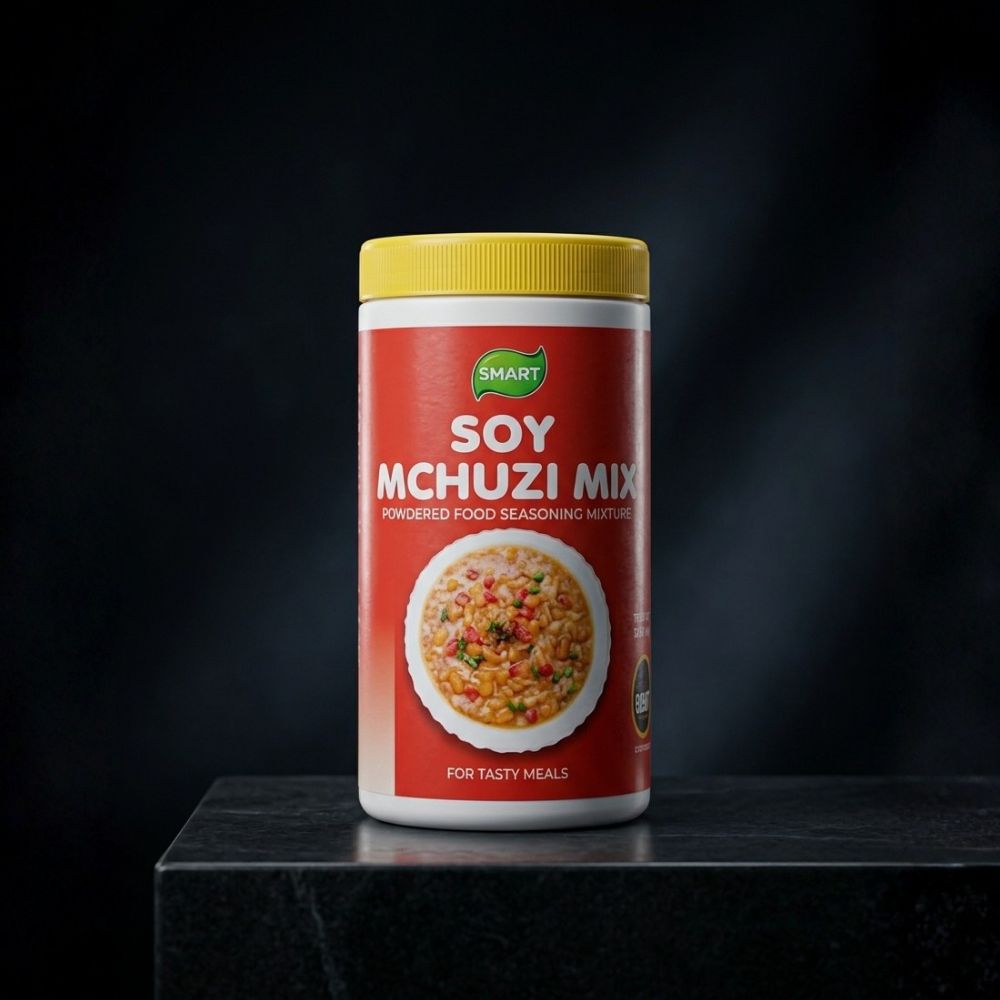
Out of that intense strategy session, a definitive brand identity was born: Smart Soy Mchuzi Mix.
This new name struck the perfect balance—it preserved the nutritional identity of the soy while instantly communicating its culinary purpose to the market. However, retail movement remained steady but relatively low. The everyday consumer still viewed it as a luxury spice.
This slow retail growth forced Martin back to the core principles of his Acumen Fellowship training. He looked past the retail shelves and asked himself: Who are the single largest institutional consumers of beans in the country?
The answer was clear: schools.
Martin reached out to Steven Mugabi, a former colleague from his days at the Presidential Initiative on Banana Industrial Development (PIBID). The two teamed up to create a compelling pitch designed specifically to show schools the value of the product.
They showed school administrators clear numbers proving how the mix could improve student nutrition while cutting down the school’s kitchen costs at the same time. By using Smart Soy Mchuzi Mix, a school could greatly reduce what they spent each week on onions, and tomatoes—all while serving a thicker, tastier, and much healthier pot of beans.
The response from schools was incredible. Large orders began pouring in, with institutions requesting 30 to 40 kilograms every single week. One of the very first schools to come on board was Ndejje Senior School—a trusted partner that remains a loyal client to this day.
Seeing this, Martin knew he had finally found the missing piece of the jigsaw puzzle. For him, the joy of seeing his own ingenuity provide better nutrition at such a massive scale across Uganda is truly unexplainable.
Today, Smart Foods Uganda has embraced this mission with immense intentionality. They actively visit schools, engaging directly with students and kitchen staff about the life-changing value of proper nutrition.
Looking ahead, Martin is already working on his next big innovation: a new formula designed to completely eliminate the need for fresh tomatoes and onions in school kitchens. This will allow struggling schools to save money on their weekly food shopping while giving student meals a massive boost in taste and nutrition.
The journey of Smart Soy Mchuzi Mix is a classic testament to entrepreneurial resilience and continuous innovation. From that first training session in the villages of Kaliro, the product began coming to life—evolving from Smart Soy For Sauce, to Smart Soya Kikomando during the lockdown days, until it finally found its true identity as Smart Soy Mchuzi Mix.
At its heart, this is a story of listening to customer feedback. But above all, it is a story of a business putting social value into real, daily practice. Today, you can pick up a packet in the supermarket to bring a healthy, rich flavor to your family meals, or order it in larger packaging to transform institutional feeding in schools. Reach out to the team directly on +256 702 285 608


Leave a Reply