
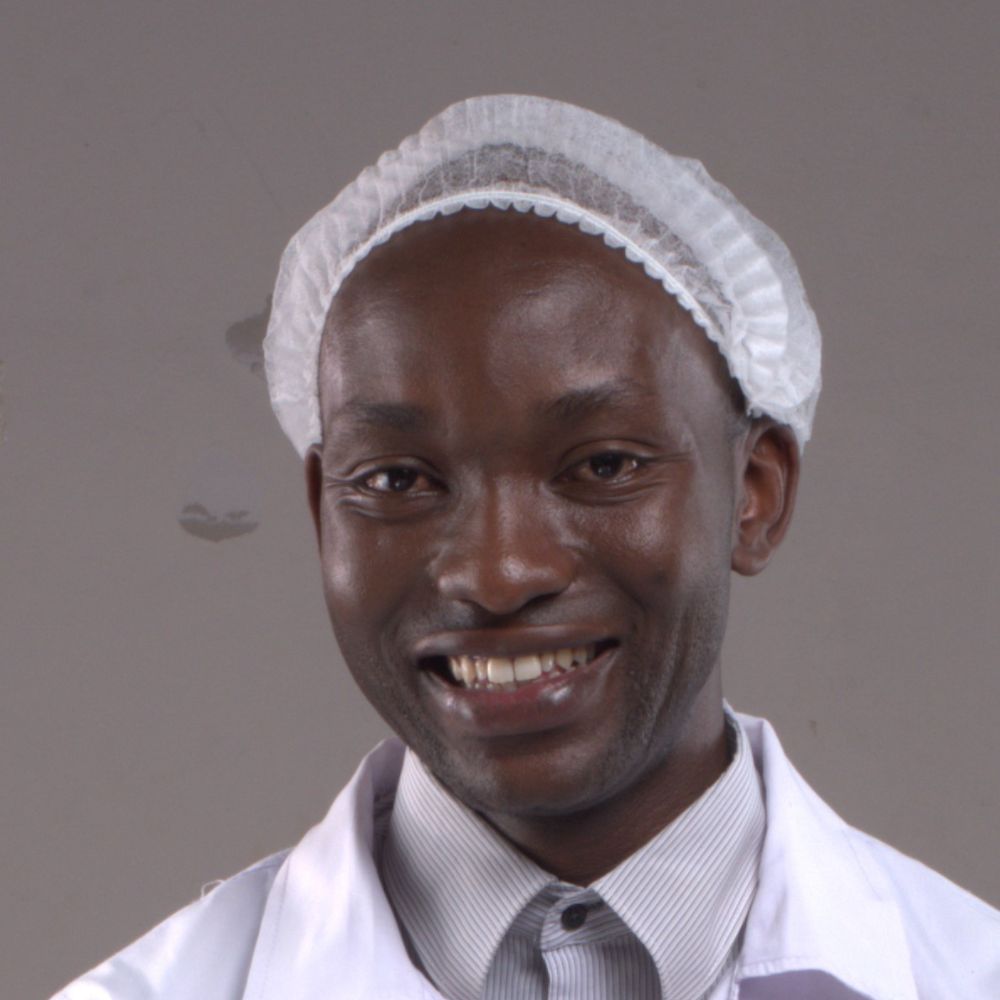
As a third-year student of Food Science and Technology at Makerere University in 2008, Ssali Martin faced a defining academic challenge: develop a completely new product from scratch using the theories learned in the classroom. His class was remarkably small—just 21 students. We shall return to that small number, and the profound reason behind it, later in the story.
Divided into groups of three, the students got to work. Martin, a natural leader even then, took charge of his group. The challenge was simply figuring out where to start.
It was in this moment of stagnation that a casual interaction with one of his lecturers, Professor Abel Atukwase, brought sudden clarity. The professor, who had just returned from earning his Master’s Degree in Belgium, issued a unique challenge: “Try working on tofu—a beef alternative made entirely out of soya.”
Martin had never heard of tofu, let alone the concept of transforming a bean into a meat alternative. Mark you, this was 2008. Internet access wasn’t a pocket luxury like it is today. Martin carried a Nokia 2100. It was a reliable handset for the era, but completely incapable of browsing the web. The only window to the world’s information was through local internet cafes.
While the Faculty of ICT at Makerere boasted an outstanding internet café, it was always packed with students during the day. Securing a computer required a strategy. For Martin, that meant waiting until the sun went down. He spent consecutive nights pulling late-night research shifts, absorbing everything there was to know about soya. What began as a mere assignment quickly evolved into an obsessive practical mission.
With his group finally aligned, they stepped into the lab to manufacture their first batch of tofu. They meticulously followed the textbook steps: soaking, pasteurizing, separating the protein from the liquid, and pressing the curd.
The result? A complete flop.
The final product was far too mushy to resemble anything close to meat.
With only a few weeks remaining before their final grading presentation, academic pressure left them no luxury to perfect the formulation. They had to pivot to Plan B: a blend of pineapple juice (omunanansi) infused with ginger. Plan B worked. The group passed, the grades were recorded, and for the rest of his teammates, the tofu project was officially dead.
But true passion has a funny way of keeping an innovator hungry long after the official assignment is over. Think of Isaac Newton and the falling apple; he could have simply eaten it and moved on with his day, but an innate curiosity forced him to ask why it fell.
When Martin approached his teammates about continuing to perfect the tofu, their response was unanimous: “We finished the assignment, Martin. This is no longer our issue. If you want to chase it, go ahead.”
In that moment, Martin experienced a timeless truth—the innovator’s journey is almost always lonely at the start. Undeterred, he turned around and walked back into the lab alone.
Perfecting tofu required grinding soya beans down to an ultra-fine paste. Soya beans, however, are notoriously hard. In his stubborn pursuit, Martin pushed the lab’s equipment past its limits, completely breaking two university blenders. To cover the damage, he had to call his father, who graciously sent him the money to replace them.
Despite the setbacks and the financial strain, he kept showing up.
Soon, Martin’s face became a permanent fixture in the university food lab. He wasn’t there for an assignment that was to be graded; he was there to conquer an idea. That level of dedication inevitably attracts the right eyes.
Recognizing his passion, Professor Atukwase stepped in once more. When Martin explained that a lack of specialized equipment was holding him back, the professor handed him $100 out of his own pocket. Martin used the funds to order for processing salts and tools from Alibaba. A few weeks later, he tried again.
This time, his persistence paid of. The final product was a much better solid block of tofu. The long nights in the lab had been worth it.
But a harsh reality check was waiting for him at home.
Excited to show his family—especially since his father was battling gout and desperately needed a red meat alternative—Martin presented the tofu to his mother. As we shared in the first part of this series, this was the ultimate test. She took one bite, looked at him, and told him bluntly that it wasn’t good. As his very first guinea pig, she sent the young food scientist right back to the drawing board.
He never gave up.
Instead, he dove deeper into the science of beef. He researched the fundamental anatomy of beef: What gives it that distinct texture? What creates its flavor profile? It was during this obsessive study that he unlocked the mystery behind why people love beef—it came down to the juicy elements and a subtle, underlying sweetness.
Armed with this scientific breakthrough, he returned to the lab, adjusting the formulation to mimic those exact properties. The grueling hours paid off. When he presented the new batch to his mother, she gave it the ultimate green light. That very formulation would eventually hit the market and perform exceptionally.
In 2009, Martin graduated. While he left university behind, his passion for tofu remained entirely fresh. His relentless drive caught the attention of another lecturer, Professor Phinehas Tukamuhabwa, a renowned specialist in soya bean breeding. Seeing a young graduate so deeply captivated by the exact seed he had dedicated his life to researching and breeding was deeply inspiring to the professor.
Professor Tukamuhabwa immediately connected Martin with a female colleague to assist in training rural households on how to incorporate soya into their daily diets. It was during these community outreaches that Martin’s love for the soya bean transformed into something much larger. Witnessing firsthand how this single, tiny seed could actively eradicate visible malnutrition in rural villages, he realized the soya bean carried a massive socio-economic destiny. He began to pay much closer attention to this little marvel.
One particular training session in Soroti permanently stamped itself onto his memory. As they were preparing to demonstrate how to grind the beans into nutritional flour, the facilitators asked the local women to provide a traditional mortar and pestle. Instead, the women proudly brought out their ancestral grinding stones (olubengo), demonstrating with immense cultural pride how their local technology was far superior at processing the hard beans.
In that moment, Martin witnessed a powerful cultural infusion. These communities weren’t just adopting a crop; they were weaving it into the fabric of who they were using exceptional indigenous technology. Later, when they mixed the fresh soya flour into local millet to cook porridge, the children in the village could barely put their cups down. They loved it.
The Soroti experience lit a fire under him. Soya was no longer just a science experiment; it was a wonder seed that needed to be explored more.
This hunger for deeper knowledge led him to discover an upcoming event in Kigali: The African Soya Bean Nutrition Conference. He knew he had to be in that room. The only hurdle? He was a fresh graduate who couldn’t afford the cross-border travel.
Seeing his burning dedication, Professor Tukamuhabwa stepped up yet again. He personally funded Martin’s journey by hiring him as a Research Assistant, tasking him with attending the Conference and delivering a comprehensive report.
This brings us back to that small Food Science and Technology University class of just 21 students.
To understand Martin’s drive, you have to understand that the Food Science course was largely populated by academic “rejects”—brilliant students who had narrowly missed the cut-off marks for Medicine Government Sponsorship and were dropped there by default. Martin was one of them; his first love was medicine, and he had missed the government sponsorship cut-off by only 1.5 points.
During his very first week at Makerere, Martin walked with a friend through the casualty ward of the Medical School. Seeing the overwhelming sight of people screaming in pain and struggling with broken limbs, a profound realization hit him: This was not his calling.
That heavy moment triggered an immediate renewal of his mind. He accepted exactly where he was and made a solemn promise to himself to become the absolute best Food Scientist Uganda had ever seen.
Therein lies one of life’s most critical lessons: the power to realign your thinking and choose to flourish precisely where you are planted. While other students were merely surviving the course to get a paper degree, Martin was thriving. It was this dedication that caught the attention of his lecturers. Dedication is a very visible thing.
It was this exact drive that allowed him to shatter university tradition, becoming the President of the Makerere Food Science and Technology Student Association during his second year—a leadership seat historically reserved strictly for third-year students.
When Martin arrived at the African Soya Bean Nutrition Conference in Kigali, he brought his prototype tofu along with him. The summit was a massive, high-energy arena where international NGOs, global entrepreneurs, commercial businesses, and top scientific experts intersected.
For the first time, Martin’s eyes were opened wide—not just to the nutritional biochemistry of the soya bean, but to its massive commercial market value.
While showcasing his work, he caught the attention of representatives from the National Soybean Research Laboratory (NSRL) based in the United States. Impressed by his innovation, they offered him a fully-funded scholarship to their intensive, world-class course on soybean utilization, processing, marketing, and distribution. The only condition? He had to secure his own US visa and flight ticket.
By this time, Martin had landed a prestigious job at the Presidential Initiative on Banana Industrial Development (PIBID). The Executive Director, Professor Florence Muranga, had personally headhunted him after witnessing his incredible steam and work ethic back at Makerere University.
As a fresh, young employee, Martin didn’t possess the personal savings required for an international flight. He walked into the Executive Director’s office, laid out the scholarship opportunity, and requested organizational backing. His pitch was simple: the advanced global processing skills he would return with would directly elevate their work on the banana project. Because he had spent his brief time at the company proving himself to be an incredibly reliable and high-value asset, Professor Muranga promised to take his proposal to the board.
With barely a week left before the course commenced in America, the board had still not reached a formal decision. Martin had already secured his visa, but the flight ticket remained out of reach. Sensing the ticking clock, Professor Muranga took a bold executive decision, stepping in to authorize the organization to purchase his ticket.
Boarding that Emirates jetliner marked Martin’s very first time leaving Africa—a landmark milestone he looks back on with deep fondness today. He still remembers every detail, right down to the fact that the ticket was purchased from Bunyonyi Safaris. Because truly, who ever forgets their first international flight?
In America, the exposure was world-class. If Kigali had opened his eyes, the US course shattered his limitations. Standing alongside the largest soya processing conglomerates on the planet, Martin marveled at the infinite architecture of the bean. It wasn’t just tofu; it was premium soya oil, yogurt, milk, snacks, you mention it.
On top of this, learning about the health benefits of soya—all backed by rigorous scientific validation—was beyond fascinating to him. But what truly blew him away was the evident scale of investment. They were taken to visit massive commercial farms, and one particular property stood out: a breathtaking expanse of over 100 acres dedicated exclusively to just soya beans.
In that moment, Martin made a quiet pact with himself: He would become the African Champion for the Soya Bean. He recognized a completely virgin market back home. While America had turned it into a massive industry, back in Uganda, soya was relegated almost entirely to porridge and flour.
Yet, as he stood on the precipice of his life’s purpose, the inevitable whispers of doubt crept into his mind like an uninvited guest.
Am I on the right track?
This question visited his mind often. And it was during such moments of vulnerability that his close university friend, the renowned lawyer and activist Isaac Semakadde, handed him the exact piece of armor he needed:
“Martin, you have been to the US. You have watched world-class professors dedicate their entire lives to studying a single bean. That means there is immense, undeniable wealth locked inside it. Those professors are not crazy to dedicate their lives to something devoid of value. Go for it!”
That encouragement was the final push.
When Martin returned to Uganda, he maintained his daytime role at the Presidential Banana Project. But the exact second the clock struck 5:00 PM, he would pack his bags and run back to the Makerere University Food Lab to build his dream.
He was no longer just chasing an interesting project; the soya bean had officially evolved from a simple passion into a lifelong purpose.
At this point in 2010, Martin was reinvesting almost 80% of his salary directly into funding his vision—sourcing ingredients, managing logistics, printing early marketing labels, and driving production. It was during these early days of scraping together every shilling that he hired his very first employee, Christine Mbalyowere. Together, side-by-side in that lab, they began to lay the foundational bricks of what would become Smart Foods Uganda.

Christine packing tofu in the early days.
The true power of this story rests entirely on the phenomenon of mind renewal. Martin found himself inside a second-choice university course, but he chose to realign his perspective and purposed to be the absolute best. That intentional internal shift ignited a visible passion, which acted as a magnet, drawing in the mentors, professors, and funding avenues needed to cultivate his dream.
This very ability to pivot became the lifeblood of Smart Foods. Whenever the market shifted, Martin realigned. For instance when heavy import competition threatened his original tofu, he adapted and innovated soy sausages, and when that market got turbulence, he adapted yet again to create soy yogurt. Every product line became a direct reflection of his refusal to quit.
Tracing the journey back to that university lab where it all began, the soya bean gave Martin more than just a purpose-driven company; it introduced him to Christine, his first employee, who would eventually become his wife and partner for life.
You can experience their premium plant-based Smart Foods range today by reaching out on +256 702 285 608 or by exploring their products online via the Made in Uganda store.


Leave a Reply