
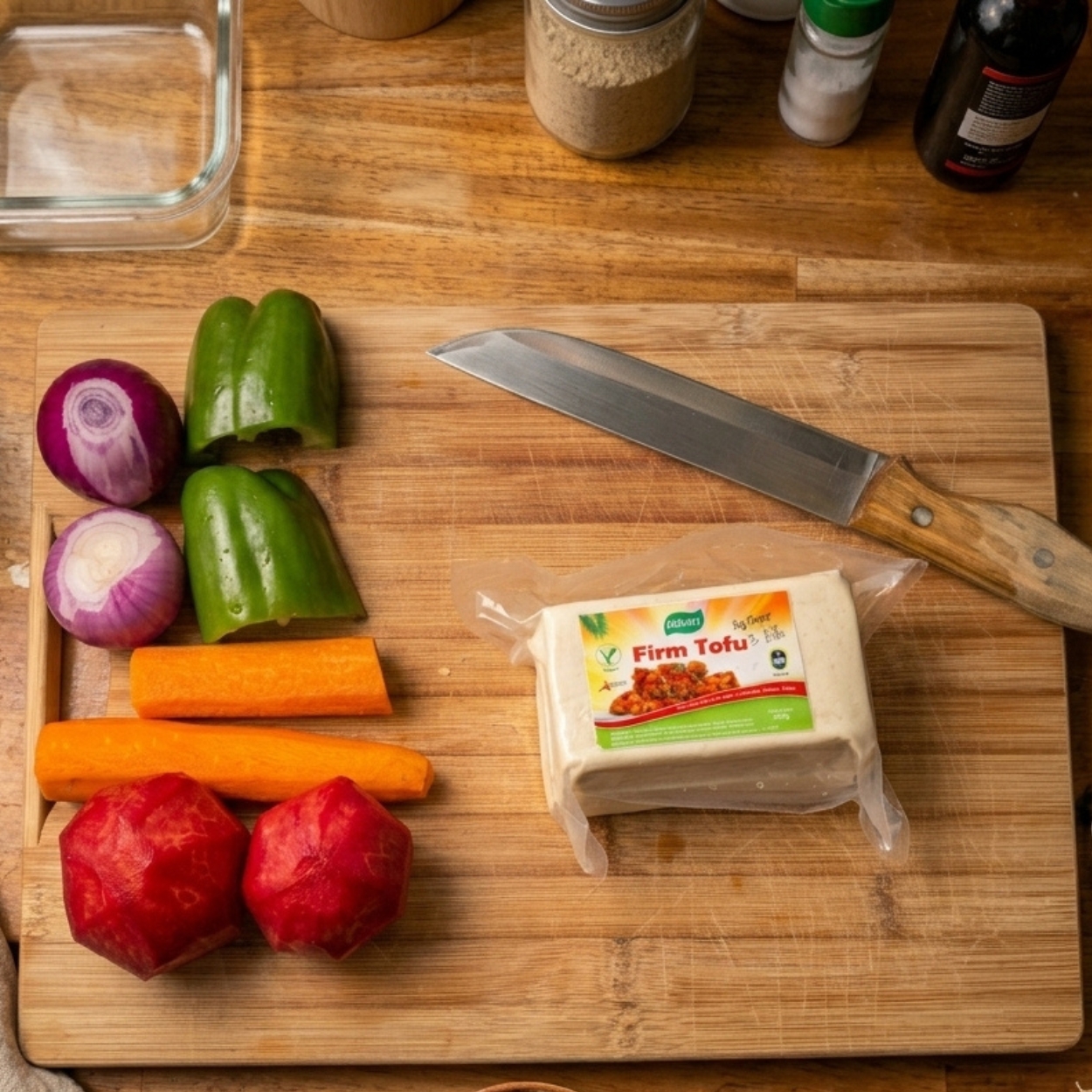
For a while on the Lapatutu blog, we’ve been telling the story of Smart Foods Uganda, exploring how the humble soybean can transform local nutrition. But telling a brand’s story is one thing; bringing its product into our own kitchen is another. In this special feature, our Editorial Director took a block of Smart Firm Tofu into her kitchen for the very first time. Here is her honest, step-by-step review.
(In her own words)
My journey of preparing and eating tofu started with knowledge.
Come to think of it, for most of the foods we try, we have either heard a glowing recommendation from a friend or read about it somewhere. For me, the journey began with insights from Martin Ssali, the visionary founder behind Smart Foods Uganda. In writing his story for Lapatutu, we were privileged to learn about this miracle food packed with vital nutrients.
We write about products we truly stand behind. Naturally, I knew I had to test Smart Firm Tofu in my own cooking and experience this healthy food myself.
The adventure began at Carrefour, where blocks of Smart Firm Tofu were neatly stacked in the refrigerator section. They were available in two sizes—250g and 500g. I opted for the 250g block, and just like that, the culinary journey was in high gear.

Back home, with my fresh vegetables cleaned and chopped, it was time to prep the tofu. I cut the block into neat, small cubes. Its texture is remarkably soft, there was no need for a razor-sharp knife here. The first thing I did was pan-fry the tofu cubes in a little oil. It took about 5 minutes on each side to get that golden, crisp outer layer—which gave the soft tofu a really nice texture.
After setting the fried tofu aside, I sautéed the vegetables in the same pan. I am particularly heavy on carrots, so they featured generously in the mix.
Just before adding a bit of water, I tossed the fried tofu back in with the vegetables. I seasoned it with Smart Mchuzi Mix (another discovery from Smart Foods), and the beauty of the dish immediately began to take shape. At this point, I added in some coriander leaves (commonly called cot meal in Ugandan markets), which instantly elevated the aroma.

To give it a deeper color and extra taste, I added a touch of soy sauce along with some water, then covered the pan and let it simmer for 7 minutes. I served this over white rice with some sliced avocado on the side. The plate looked absolutely beautiful.
As for the taste? Since it was my very first time eating tofu, I honestly didn’t know what to expect. Everything I had read described it as an excellent alternative to beef, so a small part of me expected a meat-like flavor.
On my very first bite, I immediately noticed the satisfying, chewy texture. More importantly, the tofu had absorbed the flavor of the gravy wonderfully. It didn’t taste like beef—to be completely honest—but it had a uniquely delicious flavor of its own.

The following day, I pan-fried the rest of the tofu and tossed it into a simple bean stew. That was when I realized what tofu is truly meant for: it brings life to plant-based dishes that can otherwise feel a bit routine. Tofu in bean stew was an absolute revelation. It added a meaty, deeply satisfying bite, absorbing the rich gravy so naturally that, all of a sudden, this wasn’t just bijanjalo—it was Ebijanjalo!
I would whole-heartedly recommend tofu to anyone. Not only does it make for a delicious, satisfying meal, but it also delivers all the rich health benefits we’ve been writing about on the Lapatutu Blog.
At Lapatutu Writing Creations, we are honored to document the brand journey of Smart Foods Uganda—an enterprise dedicated to bringing wholesome soybean products to tables across the country.
Leave a Reply